

In NSW, “Torrens” and “Strata” describe two different ways land (and buildings) can be legally owned and titled. Choosing the right pathway affects financing, design, common property responsibilities, approval conditions, and long-term management.
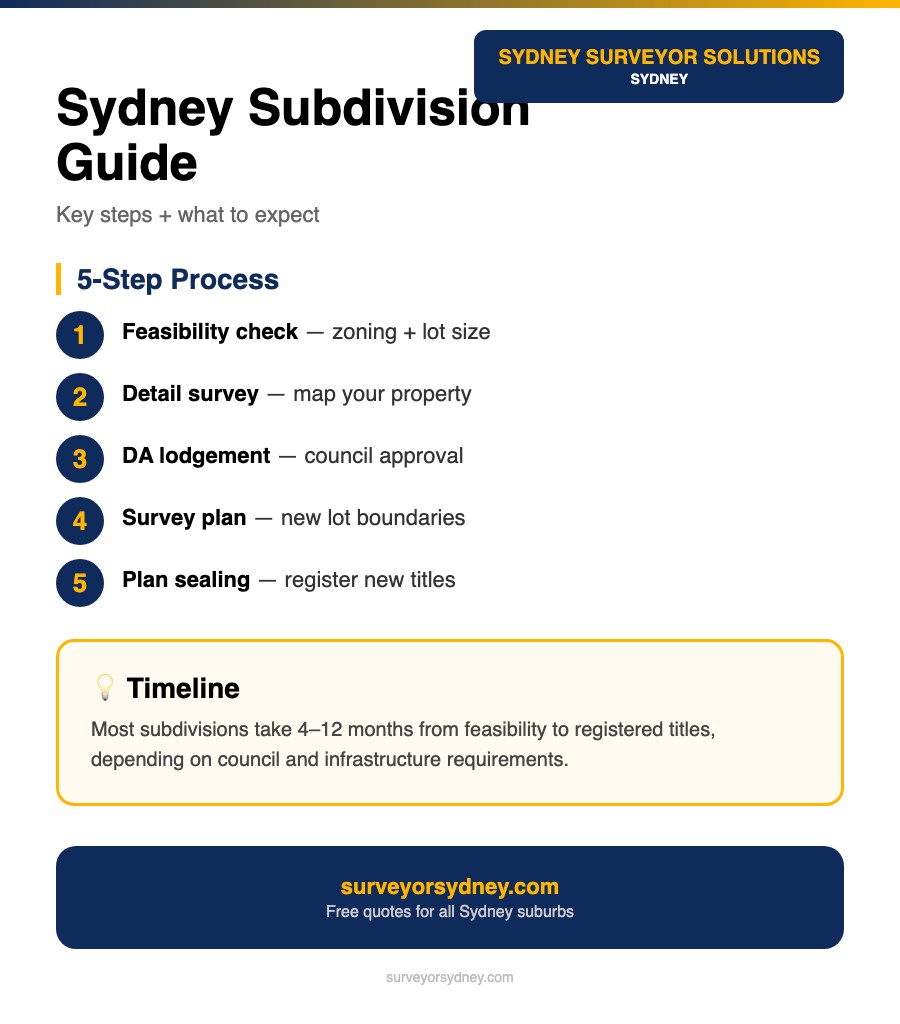
Torrens title subdivision creates separate land parcels (see our subdivision surveys) with individual titles—generally you own the land and everything on it. Strata subdivision creates lots (often within a building or development) where you own your lot but share common property (driveways, gardens, hallways, services) with other owners.
Key NSW Legislation (Why It Matters)
While many people think of title type as “just paperwork”, strata in particular is shaped by the Strata Schemes Development Act 2015 (and related legislation). Subdivision approvals and conditions sit within the planning system under the Environmental Planning and Assessment Act 1979.
Plans are ultimately registered through NSW Land Registry Services (LRS) as either:
- DP — Deposited Plan (commonly for Torrens subdivisions)
- SP — Strata Plan (for strata schemes)
When to Use Torrens Title
Torrens title is often the preferred option when the design allows each lot to operate independently. Typical situations include:
- Separate house lots with their own street frontage or independent access
- No shared driveways, shared services corridors, or shared open space
- Clear ability to allocate stormwater and service connections without crossing other lots
Each Torrens lot generally gets:
- Its own title
- Independent ownership and maintenance responsibility
- No owners corporation obligations (unlike strata)
When to Use Strata Title
Strata title is used when dwellings share any land, structure, or facilities. This is common in Sydney due to smaller lots and design constraints. Examples include:
- Duplexes and townhouses with a shared driveway
- Developments with shared visitor parking
- Apartment buildings and mixed-use developments
- Shared gardens, lobbies, corridors, or service rooms
Most duplexes and all apartment buildings require a strata (or similar community title) outcome because some areas can’t be exclusively allocated to one owner.
Cost Comparison (Sydney Benchmarks) — see also strata survey costs
As a general benchmark:
- 2-lot Torrens subdivision: often cheaper where feasible
- 2-lot strata (duplex) survey: typically $5,000-$8,000 for survey work
- Strata survey (broader range): $5,000-$25,000+ depending on lots/building complexity
Strata surveys cost more because they require detailed building measurement, definition of lot boundaries (often to faces of walls), common property delineation, and preparation of strata documentation that meets NSW LRS requirements.
Practical Differences for Owners and Buyers
Before choosing (or buying into) strata vs Torrens, consider:
- Decision-making: strata may involve approvals through an owners corporation for certain works
- Insurance: strata buildings often have shared building insurance arrangements
- Maintenance: common property repairs are shared costs
- Renovations: external works may require approvals and must comply with bylaws
How Surveyors Help Decide the Best Pathway
A professional surveyor can help you understand constraints that drive the title outcome (start by contacting our team), such as:
- Access design and driveway width requirements
- Stormwater and drainage routes (often requiring easements via Section 88B instruments under the Conveyancing Act 1919)
- Boundary constraints and minimum lot size dimensions
- Building configuration for strata lot boundaries and common property
Registration and Certification: What Actually Happens (and typical timing is covered in our Sydney subdivision timeline)
Regardless of whether you end up Torrens (DP) or strata (SP), your plan must ultimately be capable of registration with NSW Land Registry Services (LRS). Before registration, the approval/certification process generally involves:
- Achieving DA approval (or meeting CDC requirements where applicable)
- Satisfying conditions such as stormwater, access, and contributions
- Obtaining the relevant subdivision certification step (often a subdivision certificate)
- Lodging the plan (and any associated instruments such as Section 88B)
For strata, timing often depends on when the building is substantially complete and can be measured accurately.
Common Property: The Practical Reality
“Common property” is not just lobbies and lifts. On small Sydney strata schemes (like duplexes), common property may include:
- Shared driveway or turning area
- Visitor parking bay
- Service corridors for drainage and power
- Landscaped strips or common gardens
If any element must remain shared to function properly, strata can be the cleanest legal structure—even if the development looks like two separate homes.
FAQ
Is Torrens always better than strata?
Not always. Torrens offers independence, but strata may be the only practical option where there is shared access or shared building structures.
Can a duplex be Torrens title in NSW?
Sometimes, if each dwelling can be on its own lot with independent access and no shared common property. Many duplex designs in Sydney end up strata due to shared driveways or building configuration.
What do DP and SP mean?
DP is a Deposited Plan (often Torrens). SP is a Strata Plan registered with NSW LRS for strata schemes.
Does strata mean I own less?
You own your lot and a share in the common property (usually expressed via unit entitlements). Your responsibilities and rights differ from Torrens, but it’s still a full legal title.
How long does it take to register a new strata plan?
It depends on council/certification timelines and NSW LRS examination queues. A common allowance after lodgement is 2–4 weeks, but the broader project timeline is often longer.

